
How to Check Criminal History in Cottonport
Start with a full name, event date, location, and any incident, citation, booking, or docket number. The town site did not expose a dedicated police records page, records email, report form, blotter, case lookup, fee schedule, or app in the material reviewed. The fallback chain is direct town referral followed by the correct parish or state channel.
- Contact Cottonport Town Hall through the official town site and ask for the Cottonport Police report custodian.
- Request the incident or arrest report with the number, date, location, involved name, desired record type, and whether inspection or certification is needed.
- Ask for the mayor’s-court or municipal clerk when seeking a local citation, ordinance docket, minutes, or disposition.
- Search Avoyelles LAVNS or call DC-3 at 318-876-2871 for parish booking; use the Avoyelles Clerk and 12th JDC for a felony or district prosecution.
- Use Louisiana State Police BCII Right to Review for one’s own Louisiana repository cycle, and DPS&C or LA VINE only when state custody is actually involved.
DC-3 Is Not Raymond Laborde
Cottonport’s defining record-search issue is the presence of two different correctional systems. APSO Detention Center Three at 641 Choupique Lane is the parish’s 300-capacity female facility. Raymond Laborde Correctional Center, nearby on Highway 107, is a Louisiana Department of Public Safety and Corrections state institution. Their beds, records, and search tools are not interchangeable.
A person newly arrested by Cottonport Police and booked at DC-3 belongs in the Avoyelles parish workflow. A person serving a state sentence at Raymond Laborde belongs in DPS&C inmate information and LA VINE. Starting with the wrong level can produce a misleading no-result even when the person is in custody.
The Cottonport Police Department
Town police is the source for the local incident or arrest report. Because no stable web request form or direct records contact was located, use Town Hall for routing and specify the police/report custodian. Provide requester contact information, incident number if known, date and location, involved name, record type, and the desired inspection, ordinary copy, or certified copy.
The Cottonport town homepage supplies the official starting point.
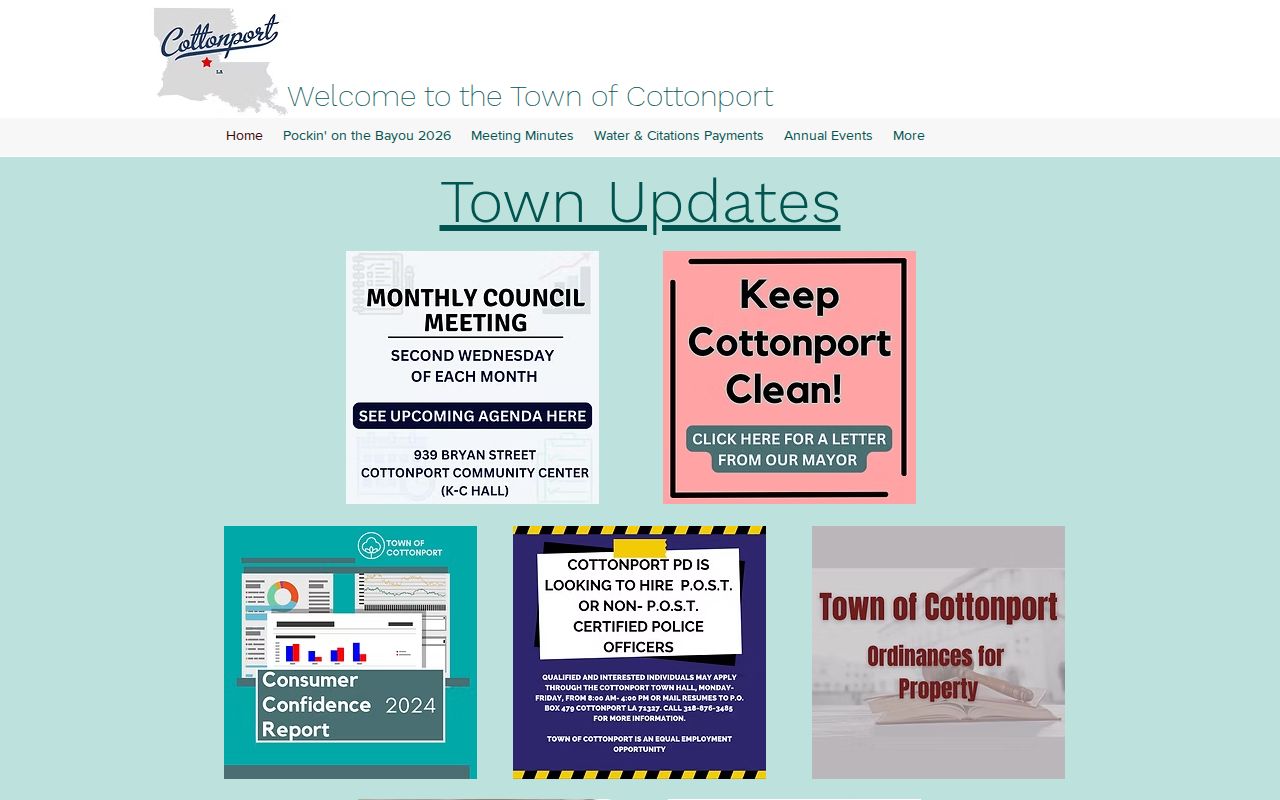
The site can route a request, but it should not be mistaken for a dedicated criminal docket or police-report portal.
Police Report or Booking Packet?
The town report and APSO booking packet document different stages. Cottonport Police records the reported event, officer action, and investigation. APSO records intake into parish detention, identity fields, booking charges, bond, housing, release, and transfer details. LAVNS may show custody information but does not reproduce the officer narrative.
Request both when the question spans arrest circumstances and detention. Then add the court record for the outcome. Charge descriptions may change between booking and prosecution, so a booking label should not be treated as a conviction or as the last word on what the court decided.
Arrests and Bookings in Cottonport
A recent arrest can appear first in the police system, then at DC-3 or another APSO facility, and later in a local or district court. Search Avoyelles LAVNS by name for parish custody and call DC-3 when clarification is needed. A roster no-result can reflect release, transfer, delay, spelling differences, or custody at another level.
The Cottonport arrest trail is therefore not a single database. Confirm the originating report with town police, booking with APSO, and the charging file with the court. The Avoyelles arrest history page provides deeper parish booking guidance and state-custody alternatives.
Calling the 300-Bed DC-3 Facility
DC-3 is the Avoyelles Women’s Detention Center, a parish facility listed by APSO with 300 beds. Its published location is 641 Choupique Lane and telephone is 318-876-2871. Use a name, date of birth if requested, and a booking or offender identifier when available. Ask whether the person is currently held, released, or transferred and what process applies to a booking-record request.
Capacity is operational context, not a city crime statistic. People housed there may come from beyond Cottonport, and facility beds must never be counted as resident population or local offenses. The correct source for Cottonport crime counts is agency-level FBI reporting with a stated year and coverage.
Cottonport Municipal Court Records
Louisiana R.S. 33:441 provides that a mayor’s court handles municipal ordinance violations unless another statutory court structure controls. The town should identify the current clerk and confirm whether a specific citation belongs locally or has moved to the 12th JDC. No public town docket, criminal case-search screen, published copy procedure, or fee schedule was located.
| Court Name | Cottonport mayor’s or municipal court, as confirmed by the town for the filing |
|---|---|
| Case Types Heard | Municipal ordinance and local citation matters within current lawful jurisdiction |
| Case Lookup Channel | Town referral to the current clerk; no official online docket located |
| What the Docket Shows | Citation or case number, settings, minutes, plea, orders, fine information, and disposition when maintained |
| Copies & Fees | Office-defined; request inspection or certification and ask about charges and delivery |
No Town Web Docket
A precise request substitutes for an online search. Give the defendant’s full name, date of birth if accepted, citation or case number, approximate date, and the exact document sought. “Final disposition,” “certified minutes,” or “warrant status” is more actionable than asking for a general criminal history.
If the town says the matter is not local, ask which court received it. A felony or district prosecution is searched with the Avoyelles Clerk and 12th JDC. The criminal court case guide explains the parish docket stages and records available there.
Where Cottonport Records End Up
Local fingerprints and dispositions may ultimately feed the Louisiana Computerized Criminal History repository at Louisiana State Police BCII. Louisiana does not provide the public with an unrestricted LACCH name search; Internet Background Check is for authorized account holders. A person checking their own record should use Right to Review.
Record flow: Cottonport Police › Cottonport Mayor’s Court or Avoyelles Parish Courts › Louisiana State Police Bureau of Criminal Identification and Information
Recent records should be sought at the creating office. For an older completed matter, compare the police or booking entry to a certified disposition and one’s repository cycle. If they do not match, Louisiana State Police correction guidance requires detailed documents covering original charges, amendments, outcome, and sentence.
State Custody Near Cottonport
The official Raymond Laborde Correctional Center page identifies the nearby DPS&C institution.
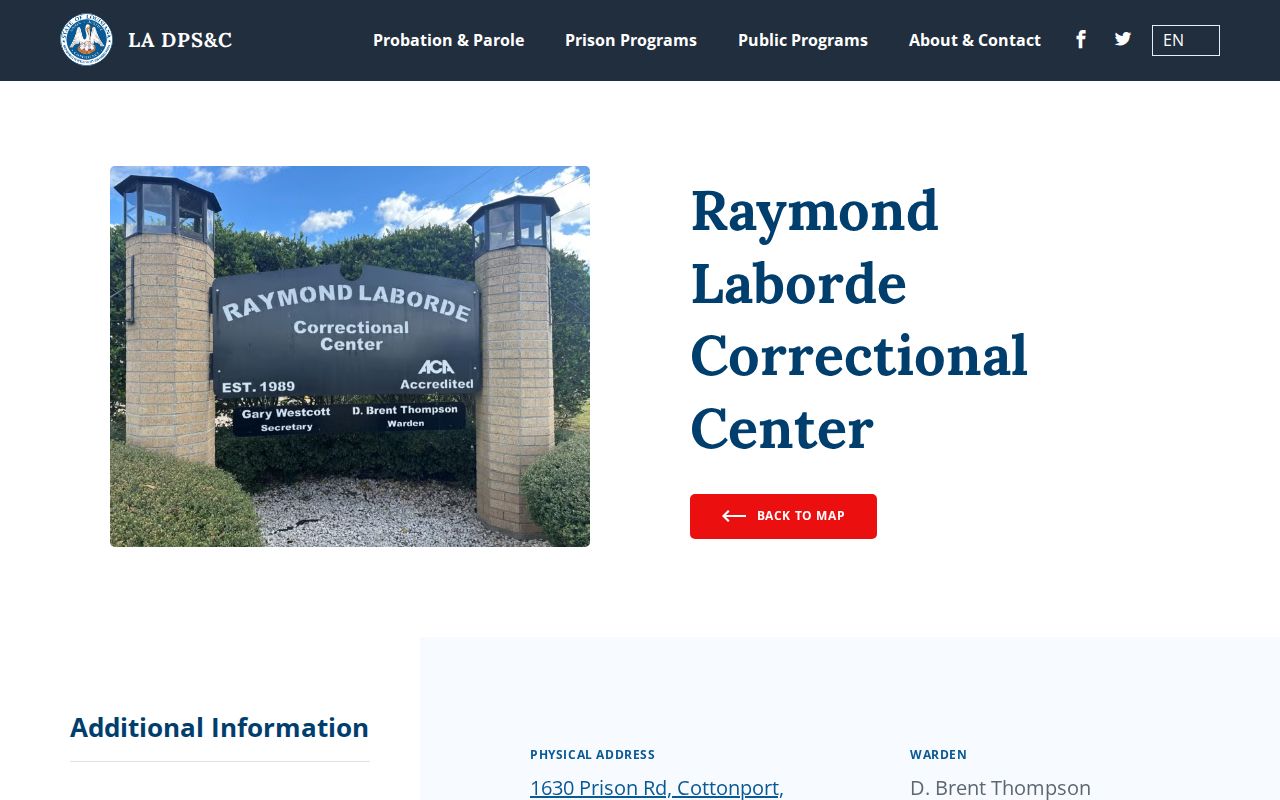
The facility is roughly thirty miles south of Alexandria via Highway 1, but geographic proximity does not make it a Cottonport police jail. State prisoner location and status belong in DPS&C or LA VINE, while a new DC-3 booking belongs in APSO’s parish system.
A state-prison search failing to find a new parish detainee is expected, not proof of release. Reverse the sequence only when the facts indicate sentencing and transfer to state custody.
Cottonport Federal Custody Records
Federal custody is separate from both DC-3 and Raymond Laborde. The official Federal Bureau of Prisons Inmate Locator searches federal records.
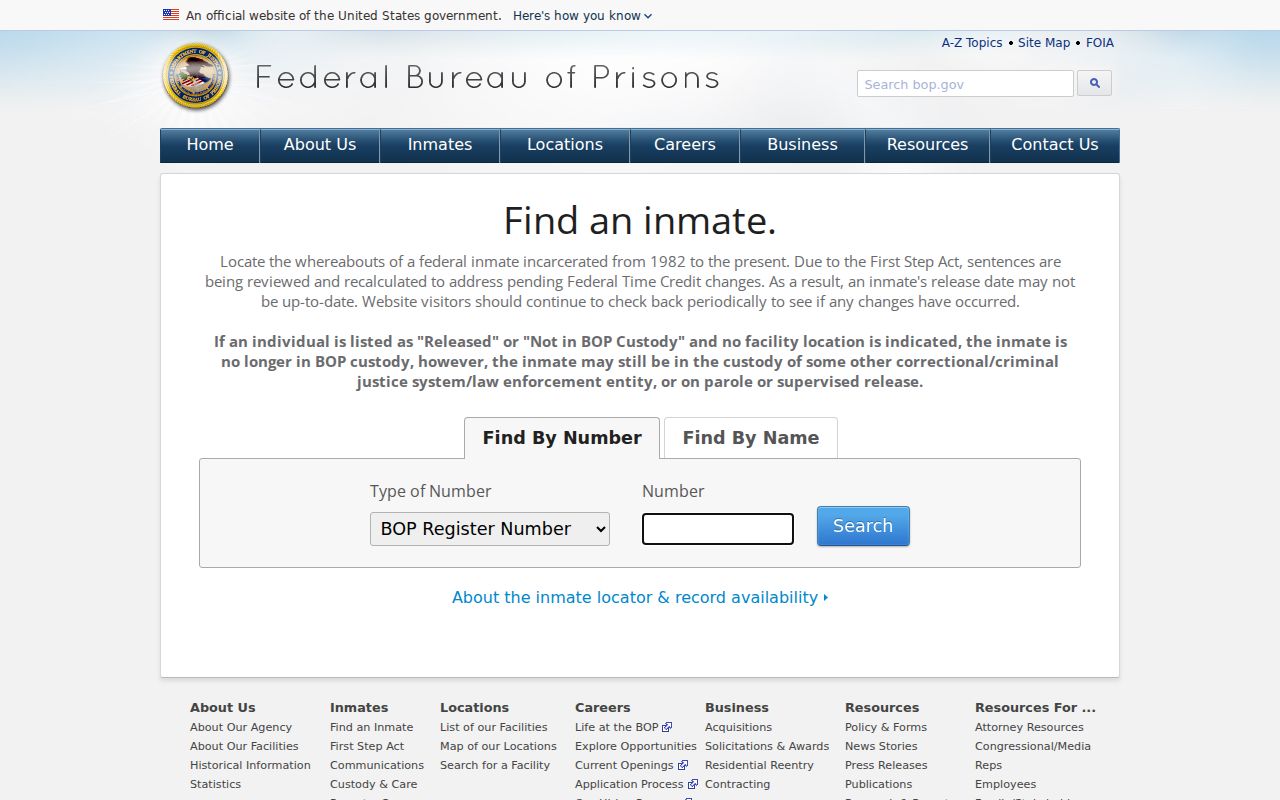
Use it only when the person may be in federal custody. A Cottonport Police report, DC-3 booking, Louisiana state sentence, and federal imprisonment can involve four different custodians, and none of their locators is a universal criminal-history search.
Bayou Rouge and Cottonport’s Past
Cottonport ranked third among Avoyelles incorporated places with 2,023 residents in the 2020 Census. The town’s official history describes a central-parish community on Bayou Rouge whose name reflects its cotton-shipping connection to New Orleans. Later damming changed the bayou’s role, while fishing and holiday use remain part of local identity.
The official Cottonport history provides that local context.
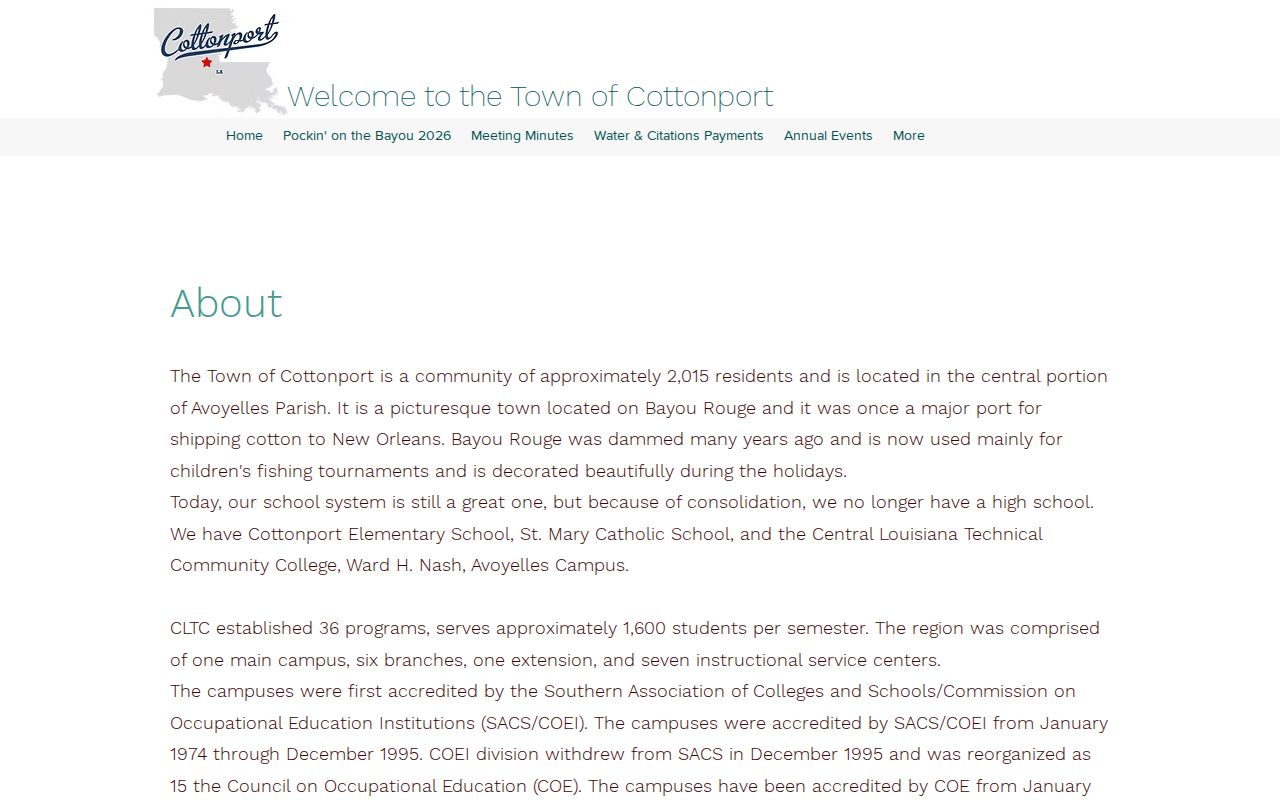
That background explains the town’s distinct identity, but historical population and modern correctional capacity should not be mixed with police crime counts.
Do Not Count Prison Beds as Crime
Official Cottonport crime counts were not published on the town site in the research. Use the FBI Crime Data Explorer, select Cottonport Police, and document the agency, year, and reporting coverage. Louisiana’s NIBRS transition means missing or partial reporting cannot support a conclusion that no crime occurred.
DC-3’s 300-bed capacity and Raymond Laborde’s incarcerated population measure corrections operations, not town offenses. Aggregate crime data also cannot verify an individual arrest or conviction. For that, return to the originating police, booking, and court records.
When comparing years, verify that Cottonport Police reported for the same number of months under the same program. Note the extraction date because federal displays can update. Do not combine town police counts with sheriff, state police, prison, or federal custody figures. Each agency’s numbers describe its own reporting activity, and a facility’s location does not assign every housed person’s conduct to Cottonport.
Public Access Rules
Louisiana’s Public Records Law governs access requests to local custodians, subject to exemptions. Active investigation material, juvenile information, sealed or expunged matters, protected identifiers, and other restricted content may be withheld or redacted. Ask for a legal basis when access is denied and whether nonexempt portions can be separated.
Because Cottonport lacks a published police form or court search, describe the record carefully. State the date range, subject, incident or citation number, whether inspection is acceptable, and whether certification is needed. Ask the town to identify the correct custodian. Parish custody requests go separately to APSO, while state-institution questions go to DPS&C.
Key Statutes:
Louisiana Public Records Law, R.S. 44:1 - Defines public records and the custodian’s access framework.
Louisiana R.S. 44:3 - Restricts specified law-enforcement and investigative records.
Louisiana R.S. 33:441 - Establishes the basic mayor’s-court role for municipal ordinance violations.