
How to Check Criminal History in Marksville
Begin with a name, date of birth if the office accepts it, the approximate event date, and any report, citation, booking, or docket number. Marksville has no official public police-report portal or City Court docket search documented in the research, so a careful telephone or counter request matters. The five-channel sequence below distinguishes an incident report from custody and adjudication.
- Call Marksville Police at 318-253-9250 for the originating incident or arrest report, giving the report number, date, location, and requested record type.
- Contact Marksville City Court at 318-253-6960 for a citation, local docket, bench warrant, minutes, or disposition within its jurisdiction.
- Search Avoyelles LAVNS when the arrest led to parish booking or custody, then ask APSO for the booking packet if needed.
- Contact the Avoyelles Clerk of Court for a felony or other 12th Judicial District Court file; use a docket number and date range when available.
- For one’s own statewide fingerprint-supported cycle, use Louisiana State Police Bureau of Criminal Identification and Information’s Right to Review process rather than assuming a public name-search portal exists.
North Main Records Corridor
Marksville is the parish seat, so city and parish justice offices sit unusually close together. Police and City Court occupy 422 North Main Street, while the District Attorney is at 417 North Main Street and APSO/DC-1 is at 675 Government Street. That compact corridor makes transfers convenient, but it does not create a shared record counter.
The official Marksville site is the source for the city police, court, and hall contacts.
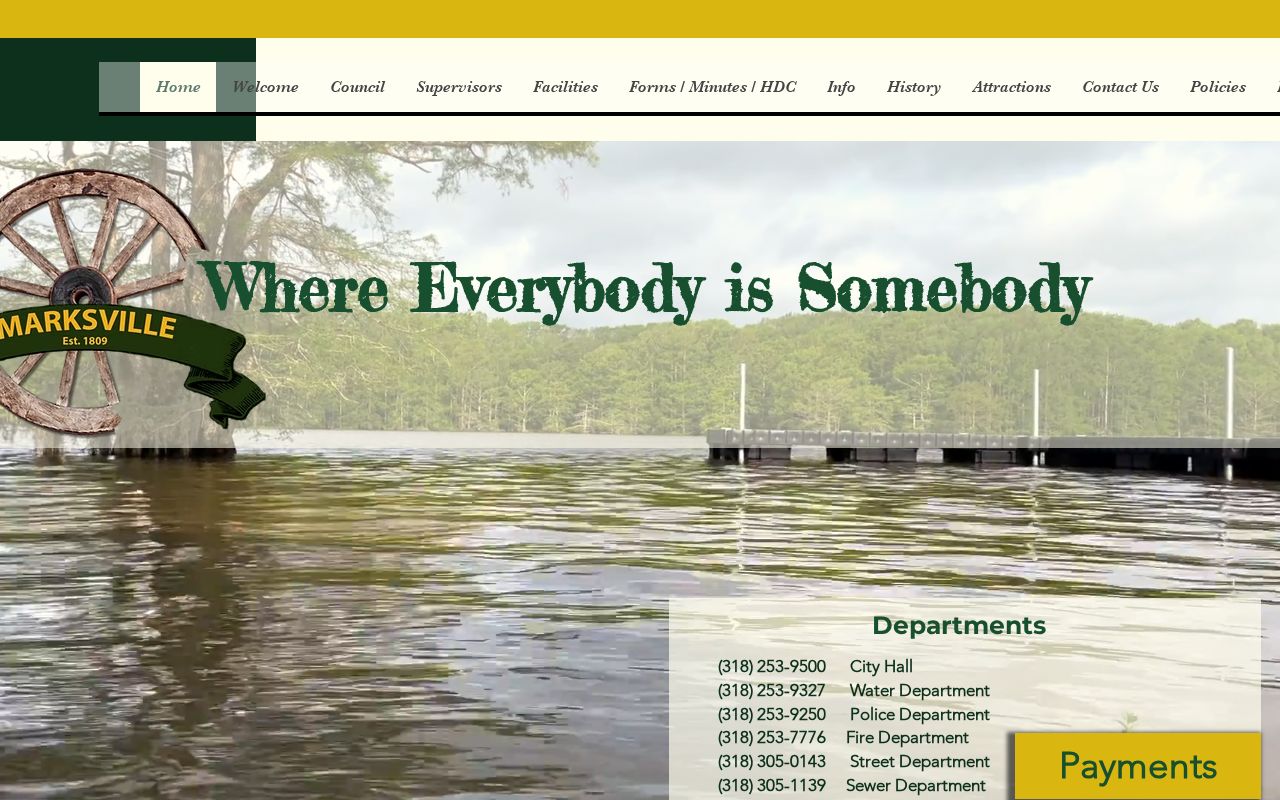
The city listing helps identify the correct office before a requester calls, but it does not replace a police report form or a public court docket.
The Marksville Police Department
Marksville Police holds the locally created incident and arrest material. A useful request identifies the requester, report number if known, event date and time, location, record type, and whether an ordinary or certified copy is wanted. The office decides what identifying details and fees apply. No stable official records email, request form, fee schedule, mobile app, arrest blotter, or stated processing time was located.
City Hall is at 427 North Washington Street and can route general inquiries, but its contact form should not be treated as a secure police-record portal. Call the police number for police material. A city report can document the officer narrative and local investigation while omitting later jail movement and final court outcome.
One Address, Two Custodians
Myth: because police and court share 422 North Main, either counter can supply the entire file. Fact: Marksville Police controls the incident or arrest report, while City Court controls its docket, citation, warrant, minutes, plea, and disposition. Ask each custodian for its own product.
The City Court Office publishes a 7:30 a.m. to 4:00 p.m. schedule. Calling first is sensible because the official material does not publish case-search fields, copy fees, or an online lookup. Give a full name, citation or case number, approximate date, and a precise description such as final minutes or certified disposition.
Arrests and Bookings in Marksville
A city arrest can create several records on different clocks. The officer’s report begins at Marksville Police. If the person enters parish custody, APSO creates booking and detention data that may appear through LAVNS. A prosecutor and court later create charging and disposition records. A newly created report may therefore exist before a roster entry or filed court case becomes searchable.
LAVNS is a custody-notification and roster channel, not a copy of the police narrative. A no-result can mean release, transfer, spelling variance, or timing. Check with APSO corrections and the arresting agency before concluding no arrest occurred. The broader Avoyelles Parish arrest history page explains the parish custody channel without replacing the city request.
A Marksville Arrest’s Three Stops
The practical timeline is police, custody, then court. First, request the city incident or arrest report. Second, check APSO for booking, bond, release, or transfer information. Third, determine the court: a city-level or qualifying misdemeanor matter may remain in City Court, while a felony or district prosecution belongs with the 12th JDC and Avoyelles Clerk.
These files answer different questions. The report explains the event from the agency’s perspective; the booking packet documents intake; and the docket records allegations, settings, pleas, rulings, and disposition. An arrest is not proof of conviction, and the later court result should always be checked.
Marksville Municipal Court Records
Marksville City Court handles matters within its statutory city-court jurisdiction, including local and qualifying misdemeanor or traffic matters. Jurisdiction can change through legislation, so the current court should confirm whether it holds a specific filing. A bench warrant should be verified with the issuing court rather than inferred from an old payment screen or third-party listing.
| Court Name | Marksville City Court, 422 North Main Street; 318-253-6960 |
|---|---|
| Case Types Heard | City and qualifying misdemeanor, traffic, warrant, and citation matters within current jurisdiction |
| Case Lookup Channel | Telephone or clerk counter; no official public web docket located |
| What the Docket Shows | Case or citation number, settings, minutes, plea, orders, warrant activity, and disposition when maintained |
| Copies & Fees | Ask the clerk about inspection, certification, delivery, and office-defined charges; no stable fee schedule was located |
When a Case Reaches the 12th JDC
A felony, district prosecution, or matter transferred beyond City Court is searched through the Avoyelles Clerk and the 12th Judicial District Court. Use the defendant’s full name, date of birth if accepted, docket number, approximate filing date, and the exact document sought. The criminal court case guide explains the parish filing sequence and court-record restrictions.
The Louisiana corrections parish directory provides a compact set of Avoyelles justice contacts.
That directory is a routing aid. It does not mean a state corrections office maintains Marksville Police reports or City Court minutes.
Where Marksville Records End Up
Fingerprints and case outcomes may eventually feed the Louisiana Computerized Criminal History system maintained by Louisiana State Police BCII, but there is no unrestricted public LACCH name search. Internet Background Check is for authorized users. A person reviewing their own Louisiana history should use Right to Review and compare it with certified court documents.
Record flow: Marksville Police › Marksville City Court or Avoyelles Parish Courts › Louisiana State Police Bureau of Criminal Identification and Information
A recent event is best checked at the creating office. An older completed matter should be reconciled across the police or booking record, the final court disposition, and one’s state record. Repository gaps can occur when a disposition has not matched the arrest cycle.
Reading Marksville Crime Data Carefully
The 2020 Census counted 5,065 Marksville residents, making it Avoyelles Parish’s largest incorporated city. For official police statistics, select Marksville Police Department in the FBI Crime Data Explorer and record the exact year and coverage shown.
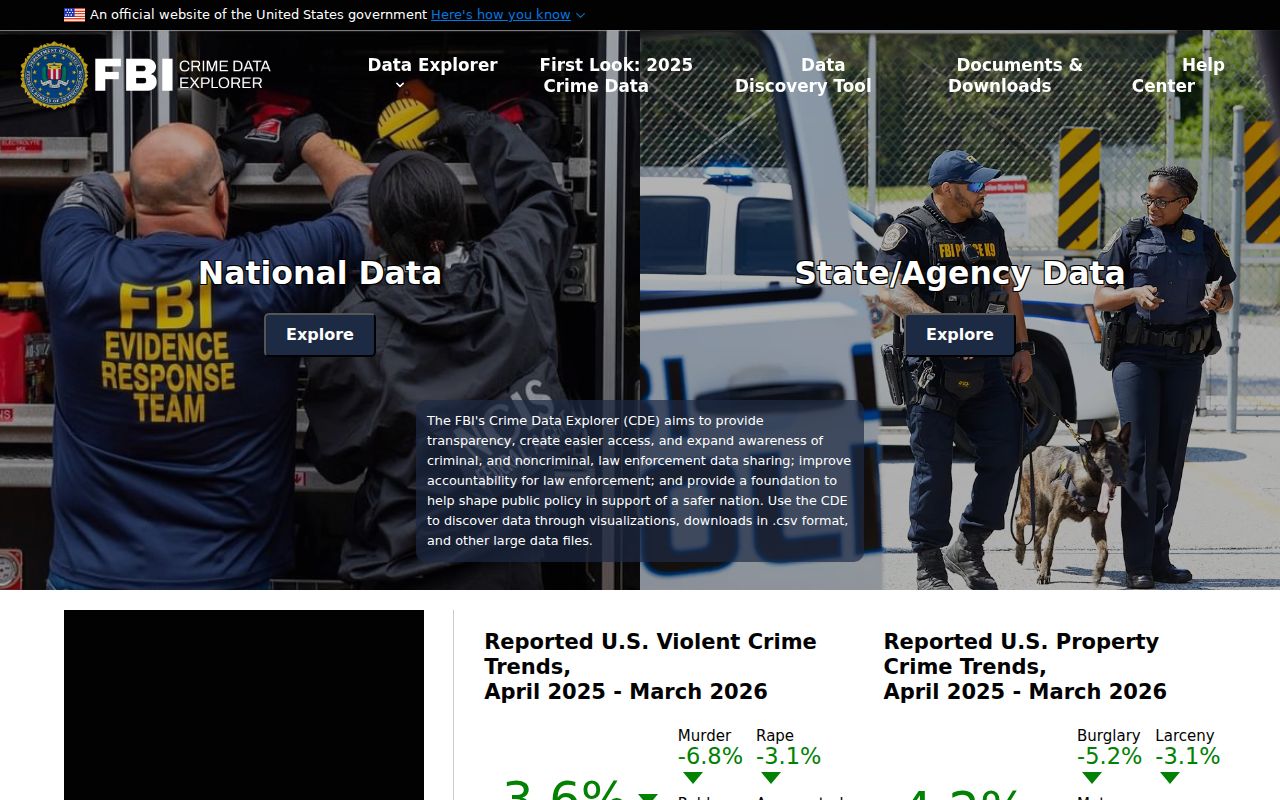
Louisiana’s NIBRS transition requires caution: missing or partial agency reporting cannot establish that crime was absent, and unlike a police report search, aggregate statistics cannot confirm an individual event.
Correcting a Marksville Record
If one’s state record is incomplete, obtain certified material from the court that handled the case. Louisiana State Police correction guidance calls for the arrest date to match within one day and for documentation to include original booking charges, amendments or reductions, the final outcome, and sentence. A short letter stating only “dismissed” may not match the cycle.
Electronic Right-to-Review delivery also has operational limits: the secure result is intended for one-time access, should be opened on a desktop for printing, and the link expires after 30 days. Save the permitted copy promptly, then compare it with the Marksville, APSO, and court records.
Before requesting correction, build a chronology of the police event, booking, court number, each charge label, and disposition date. If City Court handled one matter and the 12th JDC handled another, obtain records from both. The chronology helps identify whether the mismatch arose in the originating report, parish booking entry, court disposition, or repository match.
Public Access Rules
Louisiana’s Public Records Law generally supports inspection or copying of public records held by city and court custodians, subject to exemptions. Active investigative details, protected personal information, juvenile material, sealed or expunged records, and other legally restricted content may be withheld. A denial or redaction should identify its legal basis; access does not guarantee every part of a file is public.
Write requests narrowly enough for the office to locate responsive material. State whether inspection is acceptable, whether certification is required, and how the custodian should contact the requester about costs. Separate requests to Police, City Court, APSO, and the Clerk are often clearer than one broad request sent to City Hall.
Inspection and copying are different requests. Inspection can help a person identify the few pages that matter before ordering copies, while certification is useful when an official court outcome must be documented. Ask whether records are held electronically or on paper and whether a narrower date range will reduce search time. Never assume that a redacted report is inaccurate merely because protected details are absent; compare the public portions with the docket and final minutes.
Key Statutes:
Louisiana Public Records Law, R.S. 44:1 - Defines public records and the custodial framework for access.
Louisiana R.S. 44:3 - Limits access to specified law-enforcement and investigative records.
Louisiana R.S. 15:587 - Governs dissemination of criminal-history information and authorized background checks.