
Criminal Cases in Avoyelles Parish Courts
The Louisiana Judiciary parish profile places Avoyelles Parish in the Twelfth Judicial District Court, the Third Circuit Court of Appeal, and Supreme Court District 3. The district court has general criminal jurisdiction and is the main felony venue. Its clerk keeps the filed bill of information or indictment, docket, minutes, motions, orders, outcome, and sentence. Those records begin with prosecution, not merely an arrest.
Local cases can take another path. Marksville City Court handles authorized city and local matters at 422 North Main Street, while Bunkie City Court has limited or concurrent misdemeanor and juvenile jurisdiction within its legal territory. A mayor's court may hold a municipal ordinance file under Louisiana law. Searchers should use the charge location, citation, booking entry, or charging paper to identify the court before asking for Avoyelles Parish criminal case records.
Avoyelles Parish Has No Web Docket
No official free online Avoyelles Parish criminal docket was located. Louisiana also has no single free statewide trial-court portal. The practical channels are the clerk's counter, a phone call that scopes the search, mail, and a focused written request. The official DPS&C parish directory lists the Avoyelles Clerk of Court at P.O. Box 219, Marksville, LA 71351, telephone 318-253-7523 and fax 318-253-7578.
Ask whether staff can identify a docket number from a full name and approximate arrest or filing date. Date of birth may help distinguish similar names if the clerk accepts it. Fees for ordinary copies, certified copies, archived retrieval, and delivery were not published in accessible official sources. Request a quote before ordering. The official District 12 public defender profile confirms the local defense district, but that office is not the case-record custodian.
The official public defender source shows the Avoyelles Parish district context.
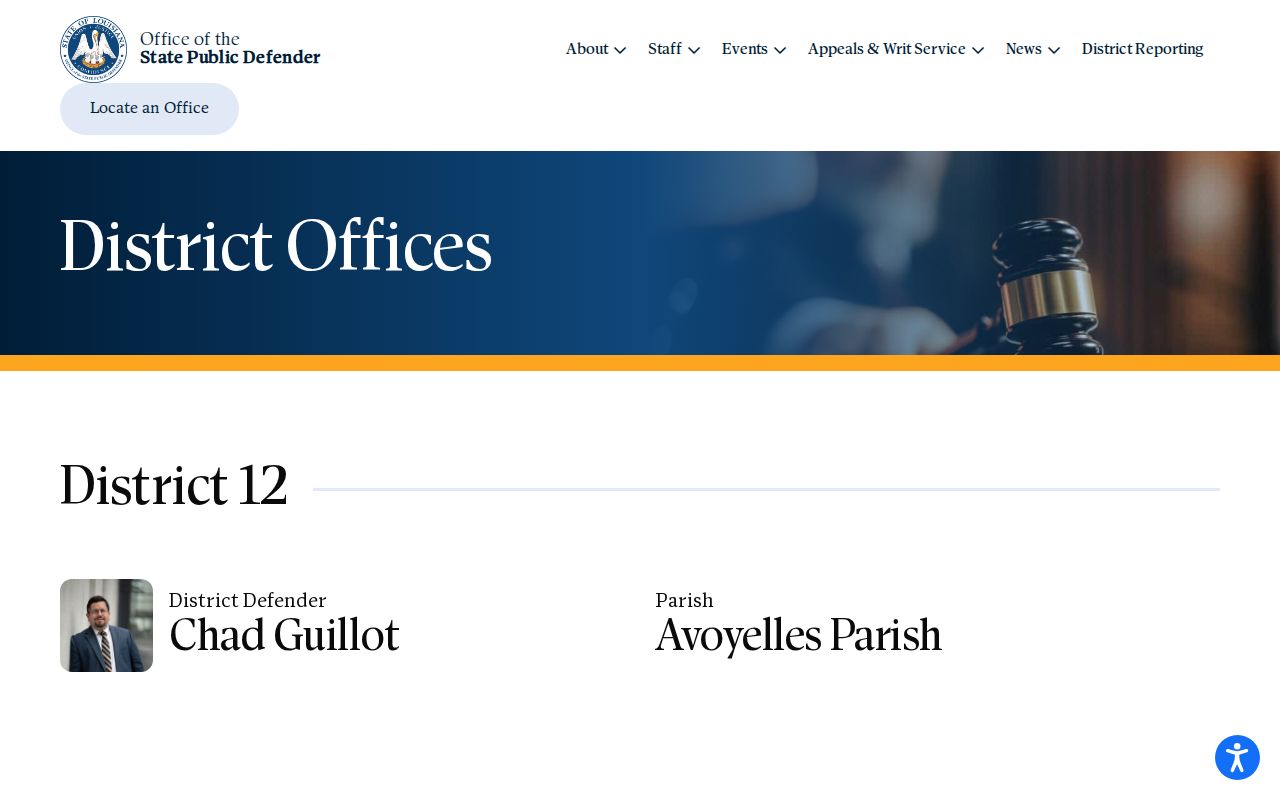
Use the clerk, rather than counsel's office, to obtain public docket material.
How to Search Case Records
A narrow request usually produces a clearer answer than asking for an entire Avoyelles Parish criminal file at once. Start with the docket sheet. It provides the map for later requests and may show which pleadings or minute entries matter.
- Determine whether the case belongs to the Twelfth Judicial District Court, Marksville City Court, Bunkie City Court, or a mayor's court.
- Call the clerk with the full name and approximate filing or arrest date. Ask whether a birth date can be used to separate similar names.
- Get the docket or case number, then request the docket sheet before selecting individual records.
- Specify the charging instrument, minutes, bond order, motions, disposition, sentence, or other needed item.
- Ask about cost, delivery, archive delay, and certification before paying.
| Request field | Use | Status | Avoyelles Parish note |
|---|---|---|---|
| Full name | Party search | Core input | Use the complete legal name. |
| Docket number | Exact file | Best identifier | Ask for it during the first call. |
| Date of birth | Name matching | Clerk-defined | Ask whether staff may use it. |
| Date range | Narrow index | Useful | Approximate arrest or filing date helps. |
| Document type | Copy request | Required for scope | Name each item instead of requesting everything. |
Route Avoyelles Parish Cases First
A common error is searching only the district clerk. A Bunkie misdemeanor, local warrant, or citation may remain with Bunkie City Court. Marksville Police and Marksville City Court share an address, but the police report and court docket remain separate records. Municipal ordinance matters may sit in a mayor's court. Felony and district prosecutions belong in the Twelfth Judicial District Court file.
The official Avoyelles Parish judiciary profile illustrates the court hierarchy.
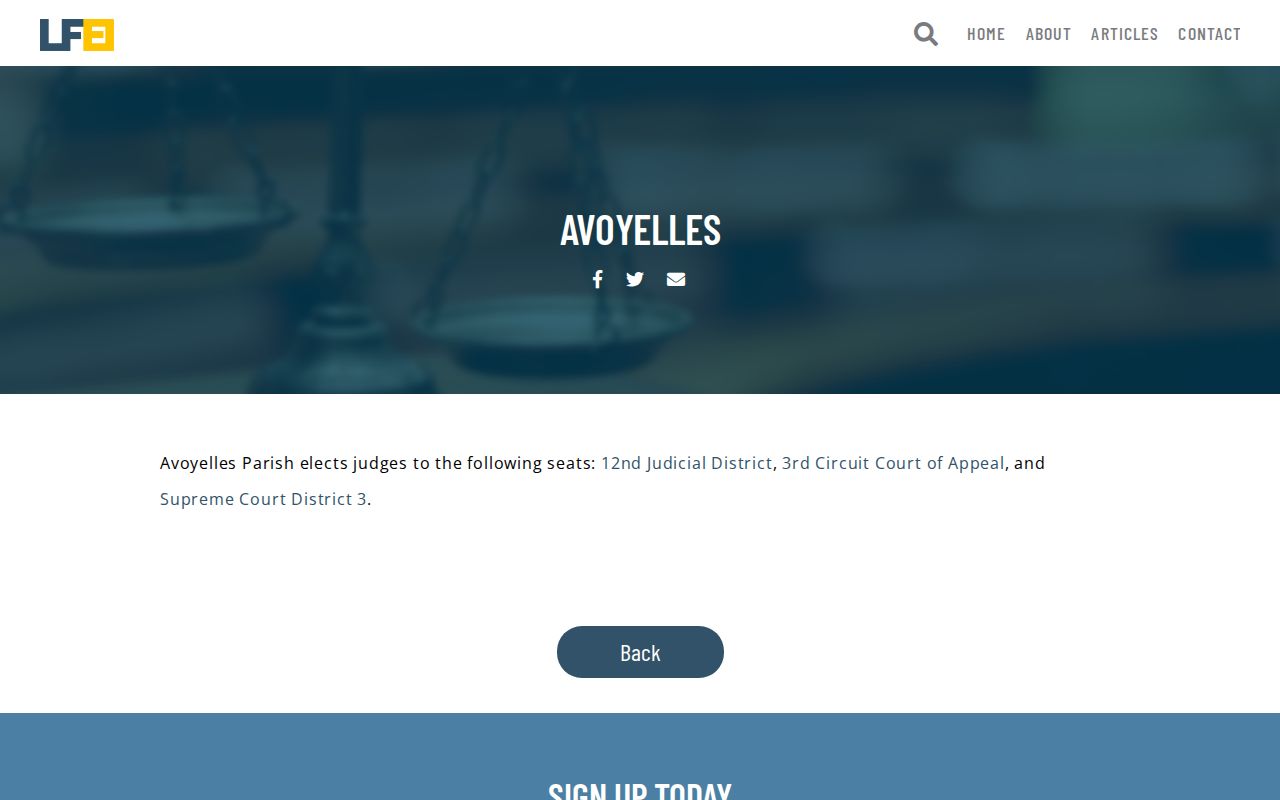
That hierarchy helps route a request without treating every local charge as a district case.
Note: A city-court payment page is not a certified disposition and does not replace the court's final minutes.
What the Case File Shows
An Avoyelles Parish court file is event-centered. It records what the prosecutor filed and what the judge did. This differs from LACCH, which links fingerprint-supported arrest cycles to reported outcomes, and from an APSO booking record, which documents intake and custody.
| Case number and court | Docket, division, filing date, case type, status, and judge. |
|---|---|
| Charging document | Complaint, bill of information, or indictment with original and amended counts. |
| Docket entries | Filings, appearances, motions, hearings, continuances, pleas, trial, and orders. |
| Bond and warrants | Bond order, release terms, warrant or capias references when public. |
| Disposition | Conviction, dismissal, nolle prosequi, acquittal, or no bill by count. |
| Sentence | Jail or prison term, probation, fines, costs, restitution, and related orders. |
Protected identifiers, victim or minor data, sealed material, and expunged content may be removed from public copies. Ask for a redacted public portion when a whole document cannot be released.
Avoyelles Parish Charging Records Differ
The arresting officer identifies alleged offenses at intake. The Avoyelles District Attorney then decides what to file, amend, divert, or decline. That is why a booking charge may differ from the bill of information. The court's final minutes and judgment are the key Avoyelles Parish disposition records.
The Avoyelles District Attorney's official site describes local prosecution and diversion work.
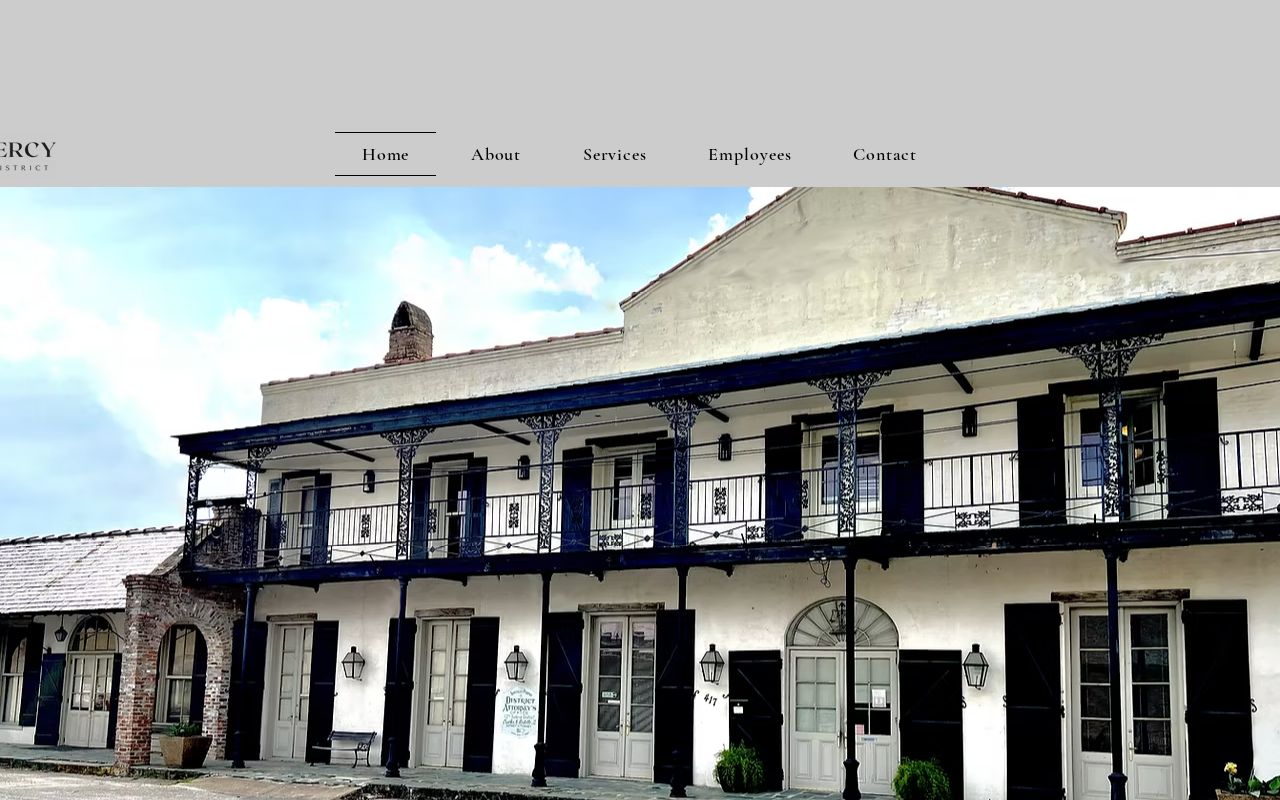
Diversion eligibility is an individual decision, not a result that can be inferred from the docket alone.
- Bill of information
- A prosecutor-filed charging document.
- Nolle prosequi
- A formal decision not to continue a charge at that time.
- Disposition
- The final outcome for each filed count.
- Capias
- A court order directing that a person be taken into custody.
Stages of a Criminal Case
After an arrest or summons, a custodial case may include booking and prompt judicial review of bond. Prosecutorial screening comes next. A complaint, bill of information, or indictment states the filed counts. At arraignment, the accused receives the charge and enters a plea. Discovery, motions, hearings, and negotiation can lead to a plea or trial. A conviction is followed by sentencing and possible appellate deadlines.
Case flow: Charges Filed › Arraignment › Pretrial › Plea or Trial › Disposition › Sentencing
Appeal records do not replace the trial file. Third Circuit materials exist only if appellate review occurs. The original pleadings, minute entries, and judgment remain with the court that heard the Avoyelles Parish criminal case.
Older Avoyelles Parish Court Files
An old case may not appear in a current electronic index. Ask the clerk about bound indexes, microfilm, off-site storage, retrieval time, and whether a certified copy can be made from the archived source. Provide a date range and all known name variants. Certification matters when the record will be sent to another official agency.
If Louisiana's repository lacks a disposition, LSP asks for original certified papers that identify the person, arrest date within one day of the repository entry, every original and amended charge, final verdict, and sentence. A short letter saying “dismissed” may omit the links needed to correct an Avoyelles Parish arrest cycle.
The public Twelfth Judicial District criminal rules provide local procedure, but they are not a case-search database. Rules explain process. The clerk's file proves what happened in one case.
Access & Restrictions
Louisiana Public Records Law supports inspection and copies subject to exceptions. It does not open every court document without limit. Juvenile matters are generally confidential. Grand-jury material, sealed filings, expunged records, protected victim data, medical information, Social Security numbers, and other exempt details can remain closed or redacted.
When the Avoyelles Parish clerk withholds a public-record portion, ask for the legal basis and whether a redacted version can be produced. Louisiana Code of Criminal Procedure article 971 defines expungement as removal from public access rather than destruction. Authorized criminal-justice and other named entities can retain access. A missing public result therefore does not prove no file exists.
Inspection and copying are separate questions. Ask whether inspection is available before ordering pages, whether a docket sheet can be sent electronically, and whether certification requires a paper copy. If an active file contains protected material, request the releasable docket and public orders instead of abandoning the search. A precise request lets the Avoyelles Parish clerk separate open case information from exempt attachments.
Federal Cases Outside Avoyelles Parish Court
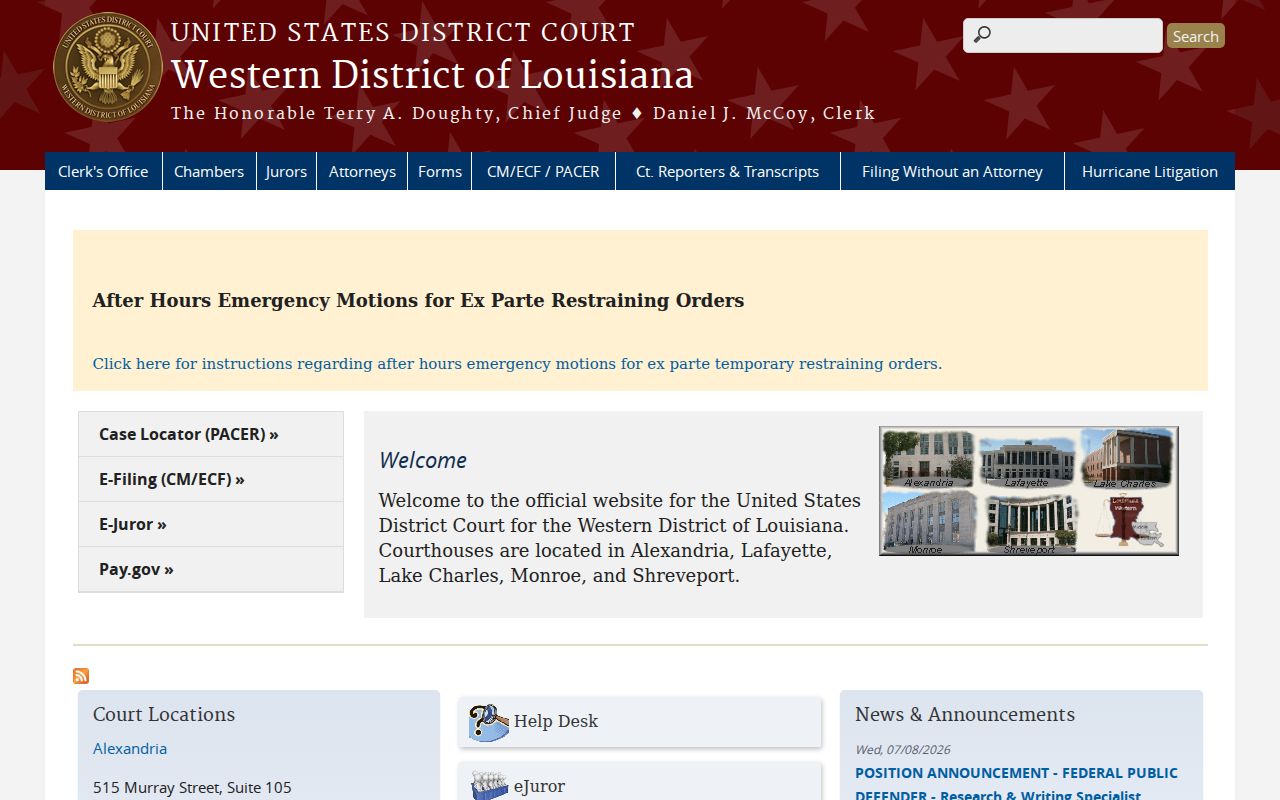
A federal criminal matter from Avoyelles Parish belongs to the U.S. District Court for the Western District of Louisiana. It will not be found by asking the parish clerk for a Twelfth Judicial District file. PACER requires registration and applies the federal judiciary's current fee rules.
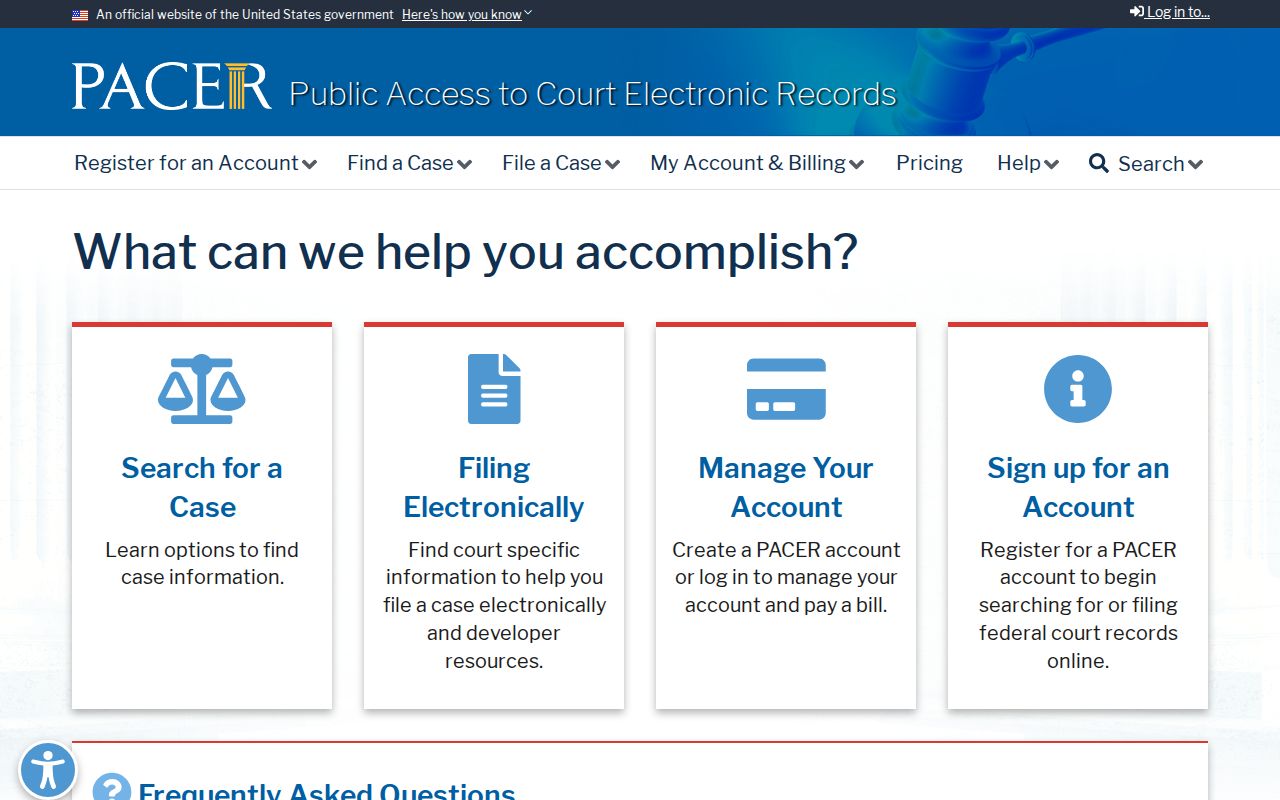
PACER supplies federal dockets and filed documents, while parish court records stay with local clerks.
The Western District of Louisiana is the federal trial court serving Avoyelles Parish.
A federal detention record may also require the responsible agency or federal custody locator.